
Oregon buyer's guide for relocators
How to Buy a Home in Oregon: A Step-by-Step Guide for Relocators
Relocating to Portland puts a new process between you and a home: Oregon's offer forms, earnest money, contingencies, inspections, and a closing where wire fraud is a real risk. This guide translates each step in plain English, with the Lake Oswego and higher-value market twists we see every week, and it mirrors the practical value of our downloadable Portland homebuying and relocation guide.
Step one: the big fork
Should you buy before you move, or rent first?
This is the first question almost every relocator asks us, and the honest answer is that both paths work for different people. Here is the trade, straight up.
Buy before you move
- You move once: straight into the city, the neighborhood, and the school pattern you actually chose.
- You run the buyer process on a relaxed timeline instead of against a lease end or a job start date.
- You lock in today’s price and rate, rather than hoping the market cooperates later.
- The trade: you commit to an area you may have only seen online, and a relocation deadline adds pressure to choose.
Rent first, buy later
- You test-drive the commute, the seasons, and Lake Oswego’s neighborhoods at your own pace before committing capital.
- You buy on your own schedule, with no move-in deadline distorting the offer you write.
- You get to watch the market for a cycle instead of guessing at it.
- The trade: you move twice, you pay rent while you save, and if prices move up, the same home costs more later.
Our honest bottom line
The right answer depends on three things, not on a headline: your buyer readiness (down payment, credit, savings cushion), market timing (no one can reliably time a market, so we work from current RMLS-sourced figures, like the numbers on our market Q&A page), and financing (get pre-approved before you decide, because the rate and payment change the whole math). We lay out both scenarios with real numbers in your price band, and we tell you honestly when renting first is the smarter move.
Step two: the offer
How does the offer process work in Oregon, step by step?
Oregon transactions run on standardized forms, and the rhythm looks like this in almost every purchase. Each step exists to protect someone; the trick is knowing who and how.
Get pre-approved before you look
Talk to a lender and get a documented pre-approval before touring. It fixes your real budget, it makes every offer credible, and it shortens the close later. Our financing partner, Travis Olson at Eureka Mortgage Planning, is based in Lake Oswego and handles waterfront and jumbo loans for this market.
Write the offer on the standard forms
Oregon residential purchases use standardized sale agreement forms prepared through a broker. Your offer states the price, the earnest money deposit, the requested closing date, and the contingencies. When we write an offer with you, we shape each of those around the specific seller and property.
Understand earnest money
Earnest money is a deposit that shows the seller you are serious about the purchase. The amount varies and is negotiated on every transaction; it is held in escrow, not paid to the seller, and it ultimately applies toward the purchase price at closing. If the deal does not close, what happens to it depends on the contract terms and whose side caused the breakdown, which is exactly why contingencies matter.
Use the standard Oregon contingencies
The typical Oregon sale agreement carries three protections: the financing contingency gives you a set number of days to obtain a loan commitment and protects you if good-faith financing falls through; the appraisal contingency lets you renegotiate or walk if the home appraises below the contract price; and the inspection contingency gives you a window to review the home’s condition and negotiate repairs, credits, or termination. Each has a deadline, and meeting those deadlines is how the process stays safe.
Step three: negotiation
What makes an offer strong? It is not always the highest price
In a competitive market, buyers assume the biggest number wins. In reality, sellers pick the offer that is most likely to actually close, and that is a mix of price, terms, and certainty.
See the Lake Oswego buyer FAQTerms and timing matter as much as price
A closing date that matches the seller’s move, a realistic inspection approach, and fewer strings can beat a slightly higher offer with loose ends. We tune each offer to the specific seller’s priorities, which we learn before we write it.
Sale-of-existing-home contingencies
If you must sell your current home first, the contract can be contingent on that sale closing. That protects you, but sellers often prefer buyers without the condition, so we structure it to be as seller-friendly as the facts allow, and we tell you honestly when it weakens your position.
Seller concessions can do heavy lifting
A seller concession is money the seller contributes toward your closing costs or an interest-rate buydown, negotiated as part of the contract. Used well, it can improve your payment more than shaving a little off the price in some cases. The numbers decide when it makes sense.
Keep realistic expectations
In multiple-offer situations the listing agent must present every offer, and sellers often counter rather than accept. We advise you to put your best, cleanest offer forward the first time, because the house you want may not come back around.
Step four: due diligence
What inspections, appraisals, and due diligence actually protect?
The inspection window is your only chance to learn the home's real condition before you are committed. We treat it as the centerpiece of the process, not a formality.
-
General home inspection
A licensed inspector reviews the structure, systems, roof, and major components. Oregon’s seller disclosures cover what the owner knows; the inspection covers what the home actually shows.
-
Specialized inspections as warranted
Many Portland-area buyers add a sewer scope, radon test, roof, pest, or chimney review depending on the home and neighborhood. On waterfront property we fold in dock, seawall, and shoreline document review. We tell you which ones your specific home deserves.
-
The appraisal
Ordered by your lender, the appraisal confirms the home’s value supports the loan amount. It protects the lender’s money and, on the buyer’s side, keeps you anchored to market value rather than emotion.
-
Review everything before the final walkthrough
Read the inspection report, the seller disclosures, and any HOA or lake documents before your deadlines pass. Then do the final walkthrough shortly before closing to confirm the home is in the agreed condition, and flag anything that is not.
Step five: new or resale
New construction or resale: which fits a relocator better?
Each path serves a different timeline and a different buyer. Here is the honest comparison, including the thing we repeat on every new-build tour: know who in the room works for whom.
New construction
- The builder's sales representative works for the builder. That person is excellent at what they do, and what they do is sell the builder's homes. An independent buyer's agent works for you: we negotiate on your behalf, review the contract, and oversee your interests through the build.
- Lot premiums are real. A view, water frontage, or a larger lot usually carries a premium above the base home price. Ask for it itemized in writing before you fall in love with the site.
- Upgrades add up. Selections, finishes, and structural upgrades are priced separately from the base home and they extend both the total price and the timeline. Budget for them before the design center visit.
- Timing to build varies. Ground-up construction takes months, and schedules shift with builder workload, lot readiness, permits, and season. If your move date is fixed, discuss the builder's written schedule and realistic worst case before you commit.
- Warranty basics. New homes typically carry builder warranties covering defined items over defined periods. Read exactly what is covered, for how long, and how claims work. Builder warranty terms differ; never assume two builders are alike.
Resale
- You move on your schedule. An existing home closes in weeks, not months, which often fits a job start date far better than new construction.
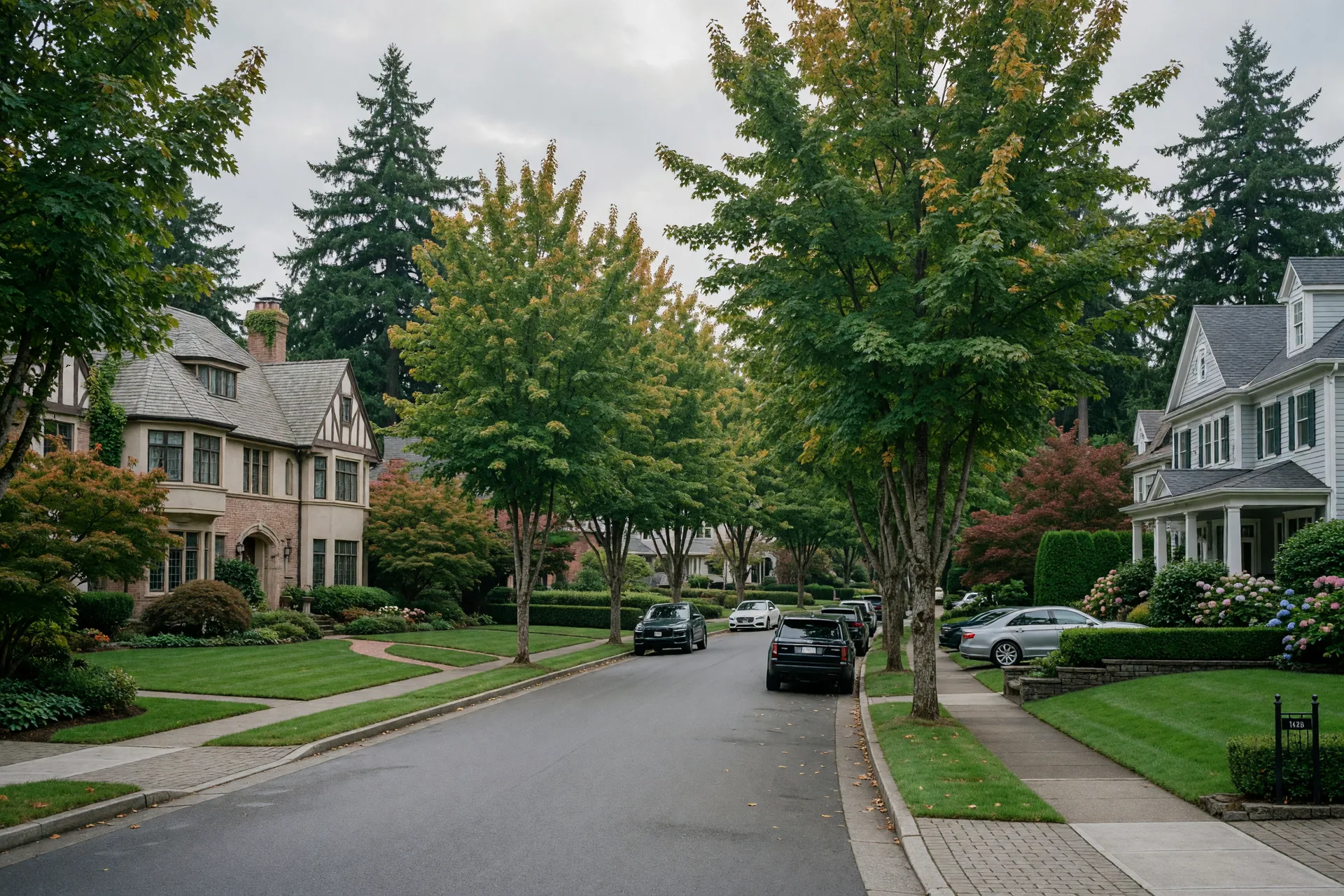
- The neighborhood is proven. Mature trees, established streets, and a real sense of place come standard in Lake Oswego's older neighborhoods; you can walk the block and talk to actual neighbors before you commit.
- Condition is your variable. You buy the previous owners' maintenance history, which is why the inspection window matters so much. The upside: resale homes are frequently priced below the cost of building the equivalent new.
- No builder warranty. Your protection is the inspection, the seller disclosures, and the contingencies in your contract, not a manufacturer's warranty. Reserve funds for the surprises every older home eventually reveals.
The Lake Oswego layer
What is different about buying in Lake Oswego's higher-value market?
Lake Oswego sits at the top of the Portland-area price band: the 2025 median detached home sale was about $1.1 million, per RMLS full-year 2025 reporting, and waterfront and estate properties run well above that; ask us for current pricing, because the market moves and the RMLS numbers come out every month. Higher price does not mean a harder process, but it does mean more due diligence layered on top of the standard steps.
Docks and shoreline
Privately owned docks, moorages, and seawalls have their own rule books: Lake Oswego Corporation membership, dock and boathouse privileges, and shoreline and seawall regulations. We review them on every lake property before an offer is written.
View corridors
A view is part of the value, and views can be lost to trees, redevelopment, or future construction. We check what protects the view you are paying for, and what does not.
HOA and lake rights questions
Some Lake Oswego communities carry HOA documents, and lakefront ownership raises questions about water rights, easements, and access that standard contracts barely touch. Those documents get read early, not at closing.
Confirmed financing
Higher-value purchases often mean jumbo loans with their own appraisal and underwriting timelines. We confirm your financing is real and fully documented before you make an offer, so the purchase price is never the risky part.
Step six: closing
How do you close safely in Oregon?
Closing costs in Oregon vary by transaction, by lender, and by title company, so confirm your exact numbers with yours and read the closing disclosure carefully when it arrives. Then protect the money itself, because the final wire is where fraudsters concentrate.
In Oregon the closing is normally handled through an escrow and title company, which coordinates the deed, the loan funding, and the settlement statement. Your agent, your lender, and the escrow officer all walk you through what to sign, and nothing should ever pressure you into wiring money without independent verification.
Wire fraud warning: read this twice
Homebuyers are a favorite target of wire fraud. Scammers send fake closing and wiring instructions that look exactly like your title company's emails, often at the last minute.
- Never follow wiring instructions received by email, text, or phone call, especially any message that changes instructions or asks you to wire to a different account.
- Always verify final wiring instructions by calling your escrow or title officer at a phone number you obtained independently, never a number from the email or a forwarded message.
- If anything feels off, stop and call your agent. Wire transfers are nearly impossible to recover once sent; a 10-minute phone call is the cheapest insurance you will buy in this transaction.
Step seven: the move
How do you coordinate an out-of-state move and two closings?
Sell or keep: decide before you shop
Whether you sell your current home or keep it as a rental changes your financing, your down payment, and your timeline. We run the ownership math with you before you start touring, so the decision is financial, not emotional.
Timing two closings
Your Oregon purchase and your out-of-state sale rarely land on the same day. We build buffer: a purchase closing date that leaves room for the sale side, or a negotiated leaseback so the sellers can stay briefly past closing. Your lender can also explain bridge or HELOC options if you need both homes at once.
Work with a referral agent back home
We connect you with a trusted agent in your current city who manages your listing and its showings while we handle the Oregon side. One team on each end, both answering to you, with a shared timeline nobody lets slip.
A relocator's realistic timeline
- 1
Week 1: pre-approval with a local lender, plus a video orientation of Lake Oswego neighborhoods and commute routes.
- 2
Week 2: a focused home search in your price band; shortlist two or three neighborhoods.
- 3
Week 3: offers, with contingencies written to protect you and a closing date that fits your move.
- 4
Weeks 4-8: inspections, appraisal, and the paperwork train, with the out-of-state sale coordinated in parallel.
Oregon buying FAQ
What do relocators ask us most?
Do I need my own buyer’s agent to buy a home in Oregon?
You do not need one legally, but we strongly recommend it: the listing agent and the builder’s sales representative each work for the seller. When we represent you, in most Oregon transactions buyer representation is compensated from the seller-side commission or as agreed in writing, and you will see exactly how compensation works in writing before any contract, because Oregon law requires it.
How much earnest money should I offer on a home in Oregon?
Earnest money amounts vary and are negotiated in every transaction. In higher-value markets like Lake Oswego, well-prepared buyers often offer more than the minimum to show seriousness, because the deposit applies toward the purchase price at closing rather than being a fee. Ask Paul or Chris for current guidance on what looks strong in your price band.
Can I use my current out-of-state lender, or do I need an Oregon lender?
You can work with a lender licensed to do business in Oregon, and many relocators keep their existing relationship. The practical advantage of a local lender such as Travis Olson at Eureka Mortgage Planning in Lake Oswego is the timeline: local appraisers, local underwriting experience, and familiarity with waterfront and jumbo financing quirks in this market.
What happens if the appraisal comes in below the contract price?
The appraisal contingency protects you: you can renegotiate the price with the seller, challenge the appraisal, or terminate the contract and have your earnest money returned according to the contract terms. The specific outcome depends on what your contract says, so we walk you through the options before any deadline passes.
How long does a financed closing take in Oregon?
A typical financed purchase closes in about 30 to 45 days from an accepted offer, and cash or well-prepared buyers can go faster. If you are coordinating an out-of-state move, we build in buffer between your closings so a delay on one side does not strand you on the other.
If I am buying waterfront in Lake Oswego, what extra steps matter?
Waterfront adds a documented layer: dock and boathouse privileges, seawall and shoreline rules, Lake Oswego Corporation membership questions, view corridor considerations, survey questions around the high-water line, and confirmed financing for the higher price. We run this checklist on every lake property before any offer is written, and the luxury buyer’s guide goes deeper.
Ready to buy in Oregon? Start with us.
A 20-minute call sorts out whether to rent or buy first, gets your pre-approval moving, and puts a shortlist together before you arrive. Paul Knighton at (503) 475-6136 or Chris Hayes at 503-621-2072, either one gets the full team.
Paul Knighton
Owner & Founder of MORE Realty, Principal Broker (Oregon) / Associate Broker (Idaho) · MORE Realty
(503) 475-6136 · call or textMoving to Oregon? Let us run the numbers with you.
Rent first or buy first: we will show you both scenarios in your price band.
Get in touchLast updated: 2026-11-12