
The Iron Furnace: Lake Oswego's Hidden Historic Gem
Most people come to Lake Oswego for the water and never notice the stone stack at the south end of George Rogers Park. That quiet, tree-shaded furnace is the reason this town exists, and it is the first stop in our new Hidden Gems series: out-of-the-way places in the Lake Oswego area most visitors have not discovered yet.
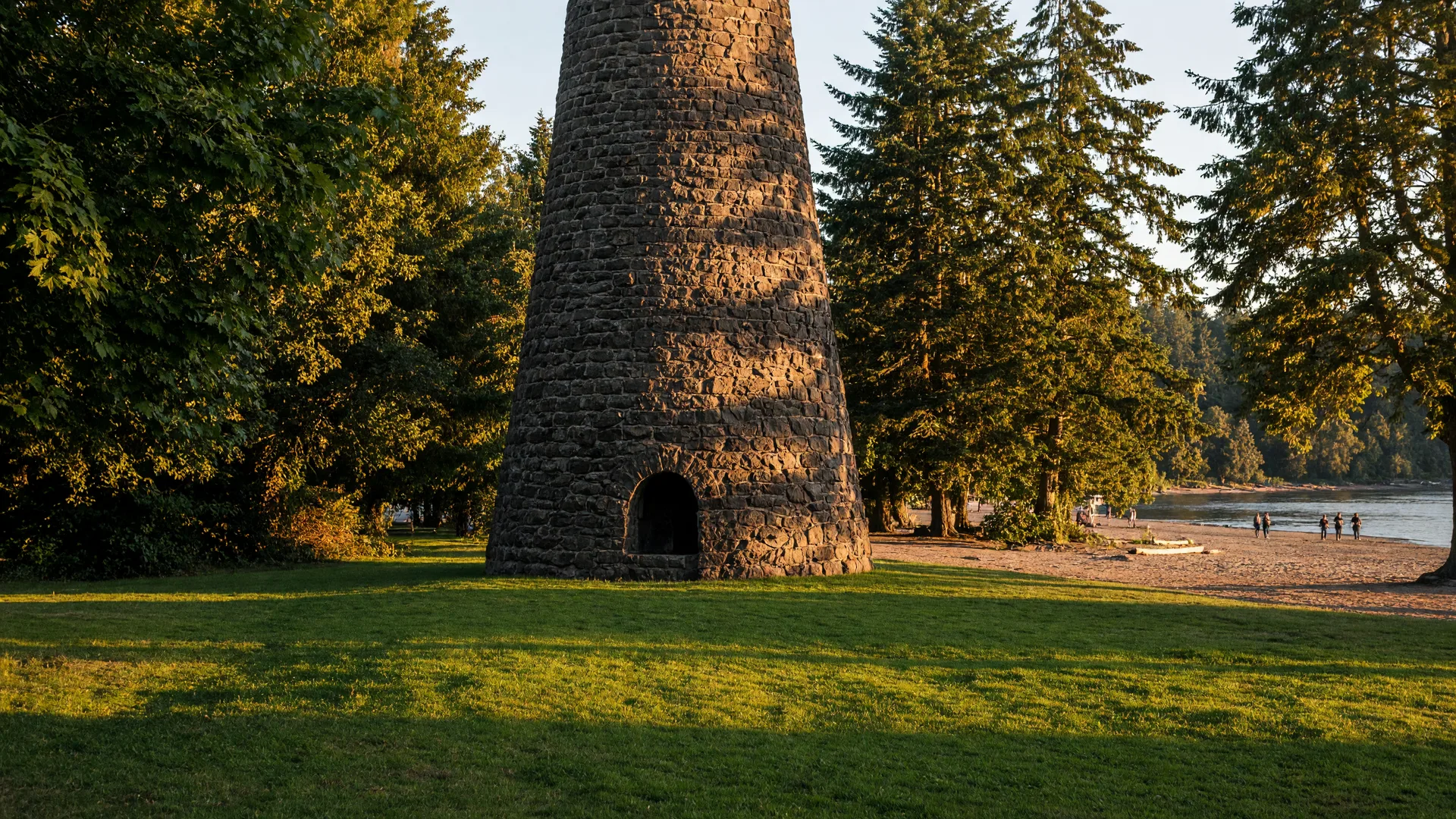
Why is there an iron furnace in a city park?
In 1866 the Oregon Iron Company, founded by brothers Henry and John Green with Portland banker William S. Ladd, began building a charcoal blast furnace on the Willamette riverbank. The 32-foot stack was modeled on the furnaces of Lime Rock, Connecticut, and when it was fired in August 1867 it cast the first pig iron ever smelted west of the Rocky Mountains. Boosters began calling the young town the "Pittsburgh of the West."
The iron era lasted barely two decades, but the furnace survived, and in 1974 it joined the National Register of Historic Places. Today it is the only 19th-century iron furnace still standing west of the Rockies, and the city restored it with a seismic stabilization project that repaired the basalt and brick for another century.
Where exactly is it and can you walk up to it?
The furnace sits in the open at the south end of George Rogers Park , at 611 S State St, Lake Oswego, OR 97034, near the corner of Ladd and South State streets. There is no gate and no fee: you walk across the lawn and put a hand on stone that shaped the Pacific Northwest. The interpretive panels tell the story of the Green brothers, the mineral sands, and the town that grew up around the stacks.
What else should you pair with the trip?
George Rogers Park itself is worth the afternoon: Lake Oswego's first community park, a 26-acre riverside spread with a sandy beach on the Willamette, ball fields, pickleball courts, and a picnic shelter. From the furnace it is a short walk along the bluff trail or a quick drive up State Street to Old Town, where Lake Theater and Cafe and the shops of A Avenue make a natural stop. Park by the farmer's-market entrance and you can see the furnace, the river, and downtown in a single morning.
Why does the furnace matter to Lake Oswego buyers?
Because Lake Oswego's story starts here. The iron industry put Oswego on the map, the lake resort era rebuilt its shoreline, and today's waterfront market traces straight back to the mill town of the 1860s. When we show homes in Old Lake Oswego we point visitors to the furnace as the best free history lesson in town. It is the gem hidden in plain sight, and now you know where it is.
Written by Paul Knighton and Chris Hayes, Principal Brokers, MORE Realty. Hidden Gems is a weekly Lake Oswego series: each post spotlights a real, verified local place worth the trip. Historic details here come from the City of Lake Oswego and the National Register of Historic Places listing, and we will not repeat a gem once it has been featured.